Home Blog Page 6

Joint Life Insurance – What You Should Know

0

When couples begin to build a life together, they often share responsibilities, goals, and dreams. Financial security is a cornerstone of this partnership, and life insurance plays a crucial role in protecting that shared future. While individual life insurance policies are a common choice, many couples are now exploring a unique option: joint life insurance.
Joint Life Insurance

This type of policy offers a single contract that covers two lives, often with a unique set of benefits and considerations. But what exactly is joint life insurance, and is it the right choice for you and your partner? This article will break down the types, benefits, and potential drawbacks of this specialized form of coverage.

What is Joint Life Insurance?

Joint life insurance, as the name suggests, is a single life insurance policy that covers two people, most commonly a married couple or domestic partners. Instead of each person purchasing their own individual policy, they are both covered under one contract. The policy pays out a death benefit, but the timing of that payout is the key differentiator.

There are two primary types of joint life insurance policies

First-to-Die:

This is the most common type of joint life insurance. The policy pays out the death benefit upon the death of the first person covered. Once the death benefit is paid, the policy terminates. The surviving partner receives the funds and is no longer covered under the policy.

Second-to-Die (or Survivorship):

This type of policy is structured differently. The death benefit is not paid until the second person on the policy passes away. This type of policy is typically used for estate planning and legacy purposes, not for income replacement for the surviving spouse.

How a Joint Life Insurance Policy Works

The mechanism of a joint life insurance policy is relatively straightforward, but the outcome depends entirely on the type of policy you choose. Here’s a breakdown of the process for each type:

For a First-to-Die Policy:

  • Application and Underwriting: You and your partner fill out a single application. The insurance company assesses the risk of both individuals. This is considering age, health, lifestyle, and other factors—to determine a single premium. The premium is often lower than the combined cost of two individual policies. This is because the insurance company only has to pay one death benefit.
  • Paying Premiums: You make one single premium payment for the entire policy, which covers both individuals for a set term (for term policies) or for life (for permanent policies).
  • The Payout: If either you or your partner passes away during the policy term, the insurance company pays out the pre-determined death benefit to the surviving partner (or to another designated beneficiary).
  • Policy Termination: Once the death benefit is paid out, the policy is considered fulfilled and automatically ends. The surviving partner is no longer covered and would need to purchase a new policy if they desire continued protection.

For a Second-to-Die Policy:

  • Application and Underwriting: Similar to a first-to-die policy, both partners are underwritten on a single application. The premium for a second-to-die policy is generally much lower than for a first-to-die policy. As the insurance company knows it will not have to pay out for a long period of time (until both people have passed).
  • Paying Premiums: A single premium is paid for the life of the policy.
  • The Payout: The death benefit is not paid out upon the first death. Instead, the policy remains active, and the second-named person continues to pay the premiums. The policy only pays out the death benefit to the named beneficiaries (e.g., children, heirs, or a trust) after both individuals have passed away.
  • Policy Termination: The policy terminates only after the death benefit has been paid upon the second passing.

Why Choose First-to-Die Joint Life Insurance?

For many couples, a first-to-die policy can be an attractive option due to its simplicity and cost-effectiveness.

  • Affordability: A major selling point of joint life insurance is that it is often more affordable than purchasing two separate, individual policies with the same coverage amount. The premium is based on the combined risk of both individuals, and the insurance company is only obligated to pay one death benefit.
  • Simplicity: Managing a single policy is easier than managing two separate policies. There’s only one premium to pay, one renewal date to track, and one set of paperwork. This can simplify a couple’s financial organization.
  • Income Replacement: A first-to-die policy is ideal for couples who rely on both incomes to meet shared financial obligations, such as a mortgage, car payments, or a child’s education. The payout ensures the surviving partner has the necessary funds to continue their lifestyle without financial strain.

Considerations for a Second-to-Die (Survivorship) Policy

While a first-to-die policy focuses on immediate financial protection, a second-to-die policy serves a different purpose.

  • Estate Planning: This policy is often used by wealthy couples to provide funds for their heirs to pay estate taxes. By waiting until the second spouse passes away, the death benefit can be used to cover the tax liability on the estate, preserving the family’s assets.
  • Caring for a Dependent with Special Needs: If a couple has a child or other dependent with special needs who will require lifelong care, a second-to-die policy can ensure funds are available to provide for that care after both parents have passed away.
  • Leaving a Legacy: Some couples use this policy to leave a substantial legacy to their children, grandchildren, or a charity. Since the payout is guaranteed, it’s a reliable way to ensure a certain amount of money is available for these purposes.

Potential Downsides and Risks

While joint life insurance has its benefits, it is not without its drawbacks. And it is crucial to understand these before making a decision.

  • No Continued Coverage: For a first-to-die policy, once the death benefit is paid, the policy ends. The surviving partner is left without coverage. If they are older or have developed health issues, securing a new individual policy may be difficult or prohibitively expensive.
  • Inflexibility: A joint policy can be less flexible than two individual policies. If the couple divorces or separates, it can be complicated to divide or convert the policy.
  • Premium Based on Combined Health: The premium for a joint policy is based on the health of both individuals. If one person is in excellent health and the other has a pre-existing condition, the policy’s cost will be higher than if the healthy individual were to purchase a standalone policy.
  • No Death Benefit for the Second Person: with a first-to-die policy, there is any death benefit paid when the second person passes away. The family may miss out on an additional payout that two separate policies would have provided.

Making an Informed Decision

Choosing between joint life insurance and two individual policies requires careful consideration of your unique circumstances and financial goals.

  • If you are a young couple with shared financial responsibilities and a desire for simple, affordable coverage, a first-to-die policy may be an excellent option.
  • If your primary goal is long-term estate planning or leaving a legacy, a second-to-die policy might be the better choice.
  • If you anticipate a need for ongoing coverage after one person passes away, or if you and your partner have vastly different health profiles, two separate individual policies will likely provide more flexibility and better long-term value.

Conclusion

Joint life insurance is a specialized tool that can be incredibly effective for certain couples. It offers a unique combination of affordability and simplicity, particularly for those focused on income replacement or estate planning.

However, it’s important to weigh these benefits against the potential for a lack of continued coverage and inflexibility. By understanding the different types of joint policies and carefully assessing your shared financial needs, you can make a strategic decision that provides peace of mind and secures the future of your partnership.


How to Apply for a Capitec Loan: A Step-by-Step Guide

0

How to Apply for a Capitec Loan- Capitec Bank has built a reputation for its simplified and transparent approach to banking, and its credit products are no exception. If you’re considering a personal loan to fund a major purchase, consolidate debt, or cover an unexpected expense, a Capitec loan can be an accessible and straightforward option.

How to Apply for a Capitec Loan

Unlike some traditional banks, Capitec offers several convenient ways to apply and a clear set of requirements. This guide will walk you through How to Apply for a Capitec Loan . It will provie you with the entire process, from understanding the initial requirements to choosing the best application method for your needs.

How to Apply for a Capitec Loan: A Step-by-Step Guide

In this section of the article, we will be showing you steps and guidelines to follow;

Step 1: Understand the Capitec Loan Types and Eligibility

Before you begin the application process, it’s essential to know what kind of loan you need and whether you meet the basic eligibility criteria. Capitec offers a variety of credit products, but the most common is the personal loan, which can be used for almost any purpose.

Eligibility Criteria:

  • Age: You must be 18 years of age or older.
  • Income: You must have a stable income. Capitec assesses your financial viability by looking at your income and expenses to determine what you can realistically afford to repay.
  • Credit Profile: Your credit history and credit score will be reviewed. A good credit history, free from sequestration or debt review, will improve your chances of approval and may lead to a better interest rate.

What You Can Get:

  • Loan Amount: Capitec offers personal loans of up to R500,000.
  • Repayment Terms: You can choose a repayment term that suits your budget, typically ranging from a few months to several years.

Step 2: Gather Your Required Documents

Capitec’s streamlined application process requires only a few key documents. Having these ready before you start will save you time and ensure a smooth experience.

  • Original South African ID Document: This is a mandatory requirement for identity verification.
  • Latest Salary Slip: This provides proof of your current income.
  • Bank Statement: If your salary is not paid into a Capitec account, you will need to provide a bank statement showing your latest three consecutive salary deposits.

For self-employed individuals or those with multiple income streams, the document requirements may differ slightly. It’s always a good idea to check with a Capitec representative or their website for the most specific information.

Step 3: Choose Your Application Method

One of Capitec’s major advantages is the flexibility it offers in how you apply. You can choose the method that is most convenient for you.

  1. Capitec Banking App or Online Banking: This is the quickest and most popular method for existing Capitec clients.
  2. Log in to your banking app or online profile.
  3. Navigate to the “Credit” section.
  4. You can get a free, no-obligation credit estimate to see what you could qualify for.
  5. Follow the on-screen prompts to complete the full application and submit your details.
  6. Visit a Capitec Branch: If you prefer face-to-face assistance or need to discuss your options in detail, a branch visit is a great choice.
  7. Bring your original ID document, latest payslip, and bank statement (if applicable).
  8. A Capitec consultant will guide you through the application process.
  9. They can help you fill out the application, answer any questions, and explain the loan terms.

Phone Application: You can also call Capitec’s contact center to start your application.

  • Dial the Capitec loan application number.
  • A consultant will take your information over the phone.
  • They will guide you on how to submit your supporting documents.

Step 4: The Credit Assessment Process

Once your application is submitted, Capitec will perform a credit assessment. This is a crucial step where they evaluate your financial position to determine if you can afford the loan.

  • Credit Bureau Check: Capitec will obtain your credit report from a credit bureau to review your payment history on previous and existing loans.
  • Affordability Assessment: They will analyze your income and expenses to ensure the new loan repayment will not put you under financial strain.
  • Final Offer: Based on this assessment, you will receive a loan offer detailing the approved amount, the interest rate, and the repayment term.

Step 5: Review the Offer and Finalize the Loan

If your loan application is successful, you will be presented with a final offer. It’s important to carefully review all the terms and conditions before accepting.

  • Check the Interest Rate: The interest rate offered will be personalized to your risk profile. Make sure you are comfortable with it.
  • Review the Repayment Schedule: Understand your fixed monthly installment and the total cost of the loan over the full term.
  • Sign the Agreement: Once you are satisfied, you can accept the offer. The funds will be paid directly into your Capitec account.

Conclusion

Applying for a Capitec loan is a user-friendly process designed for simplicity and speed. By having your documents ready, understanding the eligibility requirements, and choosing the application method that works best for you, you can streamline the process and get the financial assistance you need.

Whether you apply via their app, online, or at a branch, Capitec’s clear-cut approach makes it easier to navigate the world of credit and achieve your financial goals.

What is Physical Damage Insurance?

0

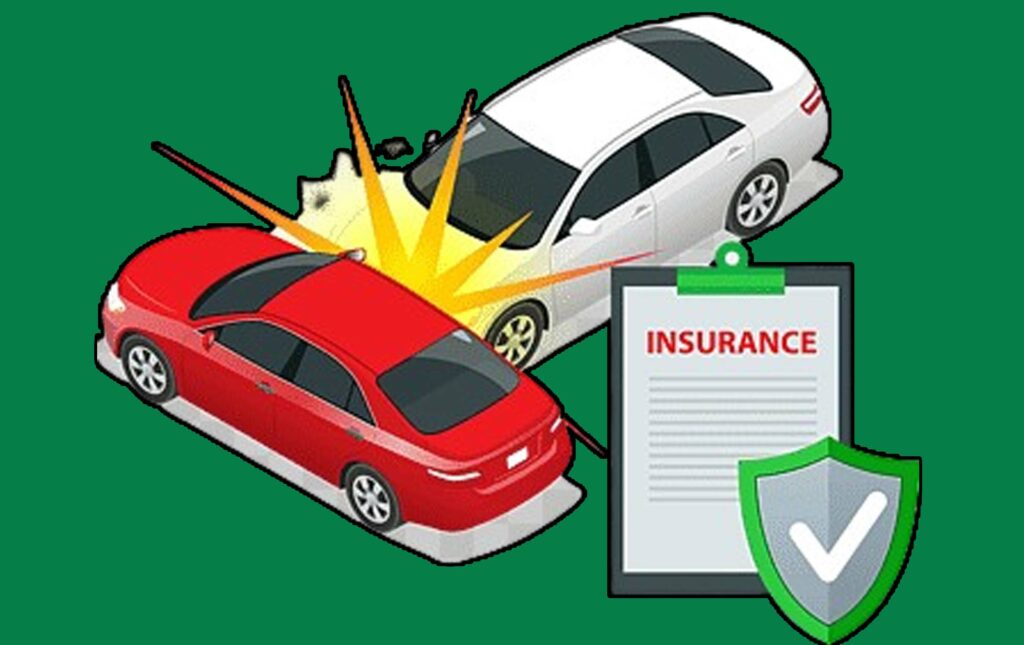
When it comes to insuring a vehicle, many people are familiar with liability insurance, which is often a legal requirement. However, protecting your own vehicle from damage requires a different type of coverage: physical damage insurance.

What is Physical Damage Insurance

This is a broad term that encompasses a critical set of protections designed to cover the cost of repairing or replacing your car, truck, or commercial vehicle in a variety of situations. Understanding what physical damage insurance is and how it works is essential for anyone who wants to protect their investment. It also ensure they are not left with a hefty bill after an accident or other covered event.

What is Physical Damage Insurance?

Physical damage insurance is a blanket term that refers to a group of auto insurance coverage designed to protect the insured’s own vehicle. Unlike liability insurance, which covers the damage you cause to others, physical damage insurance covers damage to your vehicle. It is typically a requirement if you have a loan or lease on your vehicle, as the lender wants to protect their asset.

Physical damage insurance is not a single policy but rather a combination of two key coverages:

  1. Collision Coverage: This is the part of your policy that pays for the damage to your vehicle resulting from a collision with another vehicle or an object.
  2. Comprehensive Coverage: This coverage pays for damage to your vehicle from non-collision events. Such as theft, vandalism, fire, or natural disasters.

How Collision Coverage Works

Collision coverage is the cornerstone of physical damage insurance. It specifically addresses accidents that involve hitting something.

  • The Scenario: You get into a fender-bender with another car, or you accidentally hit a lamppost while parking.
  • The Payout: Regardless of who is at fault, collision coverage will pay to repair or replace your vehicle, up to the policy’s limit. This is especially important in “no-fault” states or in situations where the at-fault driver is uninsured.
  • The Deductible: It is important to note that collision coverage comes with a deductible. This is the amount you are responsible for paying out-of-pocket before your insurance coverage kicks in. For example, if you have a $500 deductible and the repair costs are $3,000, you pay the first $500, and your insurance company pays the remaining $2,500.

How Comprehensive Coverage Works

Comprehensive coverage is your protection against the unexpected. It covers damages that are not the result of a collision.

  • The Scenario: Your car is stolen, damaged in a hailstorm, or vandalized. A tree branch falls on your car during a storm, or a deer runs out in front of you.
  • The Payout: Comprehensive coverage will pay to repair or replace your vehicle for these non-collision events.
  • The Deductible: Just like collision coverage, comprehensive coverage also has a deductible. Choosing a higher deductible can lower your monthly premium, but it means you’ll pay more out of pocket if you file a claim.

Why is Physical Damage Insurance So Important?

While liability insurance is legally required in most places, physical damage insurance is often optional unless your vehicle is financed or leased. However, opting out can be a significant financial risk.

  • Protection for Your Investment: A vehicle is a major asset. Without physical damage insurance, you are solely responsible for the cost of repairs after an accident, theft, or natural disaster. This could be thousands of dollars, or even the full cost of replacing your car.
  • Peace of Mind: Knowing that your own vehicle is protected provides peace of mind. You don’t have to worry about the financial burden of a non-collision event or an at-fault accident.
  • Fulfilling Lender Requirements: If you have an auto loan, your lender will mandate that you carry full physical damage coverage to protect their financial interest in the vehicle. The policy must remain in force until the loan is fully paid off.

When to Adjust Your Coverage

The decision to carry physical damage insurance is a personal one, but it is wise to re-evaluate your coverage as your vehicle gets older.

  • For Newer Vehicles: For a new or recently purchased car, physical damage insurance is highly recommended to protect its high value.
  • For Older Vehicles: As a car ages and its value depreciates, the cost of collision and comprehensive coverage may eventually outweigh the potential payout. For example, if your car is only worth a few thousand dollars. The combined cost of premiums and a deductible might make it more practical to rely on personal savings for repairs.

Conclusion

Physical damage insurance is a crucial component of a comprehensive auto insurance policy. It’s the protection that ensures your own vehicle is covered, whether the damage is caused by a fender-bender, a hailstorm, or a break-in.

By understanding the distinct roles of collision and comprehensive coverage and assessing your personal financial situation, you can make an informed decision that safeguards your valuable asset and gives you peace of mind on the road.

Life Insurance vs. AD&D Insurance

0

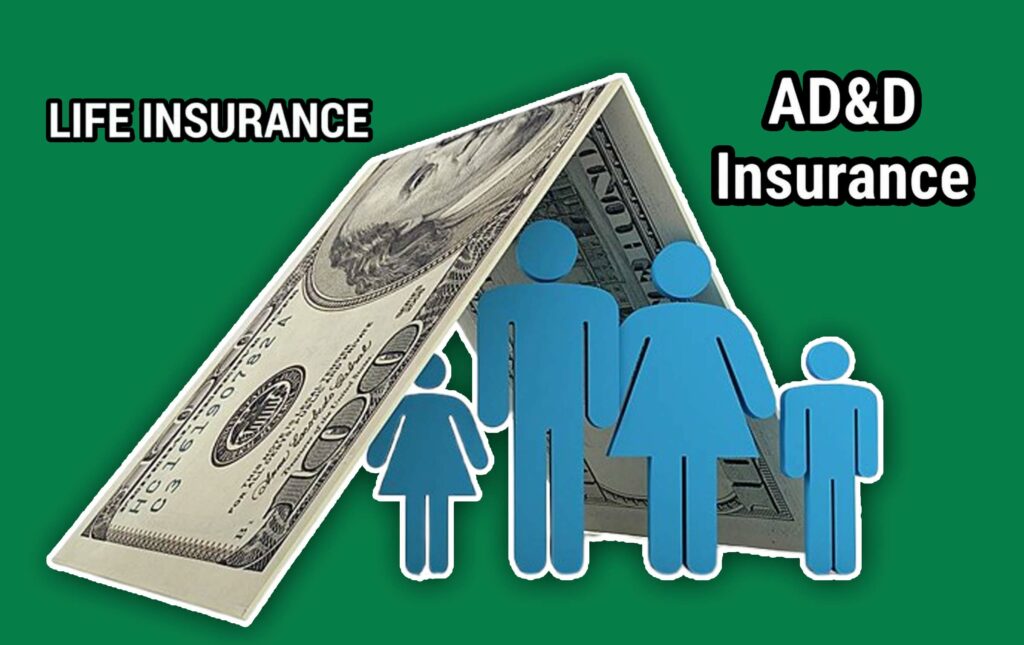
Life Insurance vs. AD&D Insurance – Navigating the world of insurance can be a complex task, with a wide array of policies and terms that often sound similar but have vastly different functions. Among the most common points of confusion are life insurance and Accidental Death & Dismemberment (AD&D) insurance. While both are designed to offer financial protection, they cover very different scenarios and serve distinct purposes.

Life Insurance vs. AD&D Insurance

Understanding the fundamental distinction between these two policies is crucial for ensuring you and your loved ones have the right level of coverage. The wrong choice could leave your family vulnerable, while the right one could secure their financial stability for years. This article will break down Life Insurance vs. AD&D Insurance. It willdiscuss how each policy works, what they cover, who might benefit from them, and why having clarity matters.

Life Insurance: Comprehensive Financial Protection

Life insurance is often described as the cornerstone of a solid financial plan, and for good reason. It acts as a comprehensive safety net, ensuring that your loved ones are not left financially stranded if you pass away. Unlike more specialized policies, life insurance is designed to cover almost all causes of death, which makes it one of the most reliable and versatile insurance options available.

How It Works

When you purchase life insurance, you’re entering into a contract with an insurance company. In exchange for paying regular premiums, the insurer guarantees a death benefit payout to your chosen beneficiaries when you die. The size of this payout depends on the policy you select and can range from tens of thousands to several million dollars.

There are different types of life insurance policies:

  • Term Life Insurance: Provides coverage for a set number of years (e.g., 10, 20, or 30). It’s generally more affordable and straightforward. If you pass away during the policy term, your beneficiaries receive the benefit. If the term expires, coverage ends unless you renew or convert it.
  • Whole Life Insurance: Offers lifetime coverage and includes a cash value component that grows over time, which you can borrow against or even withdraw.
  • Universal Life Insurance: A flexible type of permanent insurance that allows you to adjust your premiums and death benefits while building cash value.

This flexibility makes life insurance adaptable to different stages of life, whether you’re a young parent, a homeowner with a mortgage, or nearing retirement.

What It Covers

The coverage is very broad, which is why it’s considered indispensable. Life insurance generally pays out for:

  • Illness: The most common cause of death, including cancer, heart disease, diabetes, or other chronic illnesses.
  • Natural Causes: Aging-related conditions or deaths not linked to an accident.
  • Accidents: From car crashes to workplace injuries, life insurance covers them all.
  • Special Circumstances: Many policies cover suicide after a waiting period (commonly two years) and homicide, provided the beneficiary is not implicated.

The only major exclusions tend to be fraud, misrepresentation on the application, or extremely risky behavior not disclosed to the insurer.

Why It Matters

Life insurance isn’t just about replacing lost income; it’s about preserving stability. It can help pay off debts, cover funeral expenses, maintain your children’s education, and keep your family in their home. For many families, it’s the difference between financial hardship and ongoing security.

AD&D Insurance: A Narrow, Accident-Specific Policy

In contrast to life insurance, Accidental Death & Dismemberment (AD&D) insurance offers coverage that is far more limited. It’s designed for very specific situations and should be thought of as an add-on, not a replacement.

How It Works

AD&D coverage kicks in only if you die or suffer a qualifying injury due to an accident. It does not pay out for deaths caused by illness, old age, or other natural causes. Because of this narrower scope, AD&D policies are often easier to obtain. Many insurers don’t require medical exams or detailed health checks, which makes them accessible to people who might struggle to qualify for life insurance.

You can buy AD&D as a standalone policy, but most people purchase it as a rider attached to a life insurance policy. This way, it enhances the protection you already have by adding extra benefits for accidents. Employers sometimes also offer AD&D coverage as part of workplace benefit packages, usually at a low cost.

What It Covers

AD&D policies typically include two areas of protection:

  • Accidental Death: The policy pays the benefit if your death results directly from an accident, such as a traffic collision, fire, or fall. However, accidents caused by drug use, intoxication, war, or participation in dangerous activities (like skydiving) are often excluded.
  • Dismemberment: Unlike life insurance, AD&D provides partial payouts if you survive but suffer permanent injuries. For example:
    • Loss of one limb may pay 50% of the benefit.
    • Loss of both eyes and both hands may pay 100%.
    • Loss of speech or hearing may trigger partial payouts.

The exact payout percentages vary by policy, so it’s important to read the terms carefully.

Why It Matters

AD&D insurance is most useful for people whose jobs or hobbies put them at a higher risk of accidents. While it doesn’t cover illness (the most likely cause of death), it provides financial relief in cases where sudden accidents lead to disability or death, situations that can be both financially and emotionally devastating.

Life Insurance vs. AD&D Insurance

FeatureLife InsuranceAD&D Insurance
Primary PurposeTo provide a financial safety net for your family after your death, from almost any cause.To provide a benefit for death or specific injuries caused by an accident.
Causes of Death CoveredAll causes, including illness, natural causes, and accidents.Only accidental death.
Injury CoverageDoes not cover non-fatal injuries.Provides benefits for specific severe, non-fatal injuries (dismemberment).
CostGenerally more expensive due to broader coverage.Much more affordable due to its narrow, limited coverage.
UnderwritingRequires a more thorough underwriting process, often including a medical exam.Simplified underwriting; often does not require a medical exam.

Who Should Consider Each Policy?

  • Life Insurance is for everyone who has dependents. If your family relies on your income to pay for a mortgage, education, daily living expenses, or other debts, life insurance is a non-negotiable part of your financial plan. It protects against the most likely cause of death—illness—which AD&D does not.
  • AD&D Insurance is a valuable supplement, not a replacement. It can be particularly useful for individuals in high-risk professions (e.g., construction workers, pilots) or those with dangerous hobbies who want extra protection against a specific type of risk. It can also be a simple and affordable way to get some form of coverage if you are not eligible for traditional life insurance due to pre-existing health conditions.

Conclusion

While life insurance and AD&D insurance both offer financial protection, they are not interchangeable. Life insurance provides a broad, comprehensive safety net for almost any eventuality, while AD&D insurance is a highly specific policy designed to cover only the consequences of an accident.

For most people, a robust life insurance policy is the cornerstone of their financial protection. AD&D should be viewed as a supplemental tool to enhance that protection, offering an added layer of security for the specific and rare event of an accidental death or dismemberment.

HELOC vs. Personal Loan: Which Is Better

0

A common question people often ask is the difference between HELOCs and personal loans. HELOCs and personal loans are financing options for people needing extra cash. When placing a HELOC vs. a personal loan, you need to consider how much money you need, the type of risk both loans represent, and how your money will be spent.

HELOC vs. Personal Loan: Which Is Better

A HELOC gives you the access needed to a credit line and offers tax advantages, while a personal loan is better if you need one-time expenses. Whether you need cash to pay off home renovations or a loan to merge high-interest debts, HELOCs and personal loans are good options. However, they are both similar but different in their ways. In this write-up, we will be placing HELOC vs. Personal Loan to find out which is better.

What is HELOC?

This is a type of secured loan for homeowners. Your home equity is used as a guarantee that you will repay your entire loan. It is a form of revolving credit, i.e., when you repay a loan completely, you can borrow more up to a maximum limit without reapplying for another loan. HELOC interest rates are variable, and there are no limits on the amount of loan you can take.

However, the two common reasons this loan is taken are either to fund projects that cause an increment in your home value or to fund debts. There are two common types of HELOC: one is added to your mortgage, while the other is a stand-alone financial product.

What is a Personal Loan?

A personal loan is a stipulated sum of money rendered by a lender such as a credit union, bank, or any other financial institution. There is no limit to what you can get personal loans for, but you will have to repay the loan with interest on an agreed repayment term.

However, personal loans do not allow all borrowers to continuously borrow money after paying off old debts. After the repayment of your debts, you will need to reapply for another loan if you need one.

HELOC vs. Personal Loan

As I mentioned earlier, HELOCs vs. personal loans are similar to each other, but they work in different ways. A HELOC may be a better option for borrowers who need a considerable amount of money, while personal loans are best for one-time expenses. Some of the differences between HELOCs and personal loans are stated in the table below.

 HELOCPersonal Loan
  Common types  HELOC/primary mortgage combo. Second mortgage.Home improvement loans. Secured and unsecured loans. Debt compounding loans. Retirement savings loans.
  Where to getCredit unions. Major banks. Mortgage lenders.Credit unions. Banks. Alternative lenders.
    UsesMajor purchases such as funerals, weddings, etc. Debt compounding. Home renovation. Tuition costs.Tuition fees. Home improvements. Unforeseen expenses. Car purchase. Compounding debts.
Typical loan limitsUp to 65% of the home value.Up to $50,000 based on lender.
    Qualification requirementsCurrent home value. An acceptable credit report and score. Home equity. Ability to pass the mortgage stress test.Credit report and score. Permanent address. Age of majority. Employment and income proof.
Typical interest ratesRanging from 3% to 10% based on the lender and credit profile.10% on average based on lender and credit profile.

How to Choose Between HELOC and Personal Loan

To know which of these loans are good enough to meet your financial needs, you need to consider the following questions:

Do I have home equity?

If you do not own real estate, HELOC is not a good option for you because it would be difficult for you to offer equity as collateral. Instead of going for HEOCL, you can just go for a personal loan, but if you own real estate, confirm that you have enough equity. The required equity for HELOC is at least 20%. Be aware that comprehending equity means your home is on the line if ever you fail to repay the loan.

What are my goals?

If you need a loan to cover a one-time expense and you are sure that your loan will be less than $50,000, a personal loan is preferable. If you need to cover major expenses and completing them would take a year or two, getting a HELOC is a better option. Because HELOC is a revolving credit, it is easier to use it to cover your expenses.

What interest rate do I want to pay?

HELOC is a secured loan, meaning it offers lesser interest rates than unsecured personal loans. As long as you have an acceptable credit score, you can go for a HELOC. But if you do not have access to collateral, getting an unsecured personal loan is preferable.

How Do Insurance Companies Make Money

0

Insurance companies are known based on their business type to assume and alternate risks. The insurance vital model involves the removal of risk from payers and passing it over to a larger portfolio. But with all these how do insurance companies make money? There are different ways insurance companies make money.

How Do Insurance Companies Make Money

Through the generation of revenue using two different ways (charging premiums in exchange for policy coverage and reinvesting these premiums into other assets) insurance companies can make money. Insurance companies also regularly get paid by their customers for insurance policies that cover home, travel, life, car, business, and valuables. Let’s read together to discover how insurance companies make money.

4 Ways Insurance Companies Make Money

There are different ways insurance companies make money. In this section, we will be talking basically about 4 ways insurance companies make money. The explanation below shows the different ways insurance companies make money.

Pricing and Assuming Risk

This is common with property insurance companies, health insurance companies, and financial generators. The first duty of an insurer is to charge for assumed risk and a premium for it. If for example, an insurance company offers coverage with a $100,000 conditional payout, they need to check out how likely a forthcoming buyer will trigger the conditional payment and extend the risk depending on the policy’s length.

At this point, underwriting is analytic. Without having good underwriting, the insurer may charge the insured more than others for minor assumed risks. This can, however, bring out the least risky customers and cause more rise in rates. If an insurer charges for risks constructively, more income on premiums spent on additional payouts should be earned.

The real product of an insurance company is insurance claims. Anytime a policyholder files a claim, it is a must for the insurance company to process the claim, confirm its accuracy, and make the necessary payments. The process of adjusting a claim is compulsory to bring out fraudulent activities and reduce the risk of loss to the company.

Interest Earnings and Revenue

For example, if an insurance company earns $1 million on premiums for its insurance policies, it can decide to keep the money in cash or place it in a savings account, but unfortunately, these methods are not effective enough. These savings will be exposed to inflation risks.

Instead of considering these, the company can decide to locate a safe place, such as short-term assets, to invest the money into. This creates additional interest income for the insurance company during the wait period for payouts.

Reinsurance

Some insurance companies carry out reinsurance to lessen risks. Reinsurance is a type of insurance that insurers purchase to cover themselves from immoderate losses caused by high exposure. Reinsurance is an essential part of insurance companies striving to protect themselves and avoid levies due to payouts.

For instance, an insurance company insures too much hurricane insurance depending on models that interpret low chances of hurricane inflation. If the unbelievable happens with the hurricane, substantial losses on the insurer may occur.

Without reinsurance lifting some of the risks, the insurance company may go out of business each time a natural disaster occurs. However, most insurance companies charge higher insurance rates to policyholders and purchase cheaper reinsuring rates for these policies on a large scale.

Evaluating Insurers

By removing the alternations of the business, reinsurance makes the whole insurance region more appreciative for investors. Some insurance region companies, such as non-financial services, are estimated depending on their profitability, payouts, foreseen growth, and risk. Aside from this, there are other issues particular to the insurance region.

Hence, insurers do not make investments in fixed assets; every detail, including little capital disbursements and little depreciation, is kept in record. Calculating the working capital of the insurer is quite difficult since there are no specific working capital accounts.

Other Ways Insurance Companies Make Money

Reinsurance, interest earnings, and others are known to be the major ways insurance companies make money. Aside from them, there are a few other ways insurance companies make money; some of these are:

Coverage lapses

Most times, policyholders do not stay current on their insurance coverages, and this triggers a commercial scenario for insurance companies. Coverage lapse means an expiry of an insurance policy without payment of any claims. When this happens, insurance companies keep all the premiums paid by the policyholder. This means that the insurers get to keep the money to themselves while the policyholder carries all the risks of walking away from an active insurance policy.

Cash value cancellations

When a policyholder securing whole life insurance coverage finds out they own a large sum of money through cash values that are generated through investments and dividends from the insurer, they will want the money even if it results in the closure of the account.

Insurers know fully well that when a policyholder carries cash values and closes their accounts, all the liabilities for the insurer come to an end. All premiums already paid by the policyholder are kept by the insurance company. However, they pay the customer with interest earned on their investment and keep the rest to themselves.

Should I Use Life Insurance Agents

0

Should I use life insurance agents? When it comes to buying life insurance, it often makes sense to consult the help of a life insurance agent. It can be difficult at times to navigate the insurance industry, mostly because of the wide range of policy options, coverage types, and financial factors that are involved. A lot of people often battle with the idea of whether to use a life insurance agent or not. While it is possible to purchase life insurance without the help of an agent, working with one makes the process a lot easier.

Should I Use Life Insurance Agents

Life insurance agents are trained and licensed to offer invaluable knowledge. And customized suggestions that streamline the decision-making process of insurance buyers. Whether or not you need a life insurance agent when purchasing a policy typically depends on your need and quest for accurate information.

Who Is a Life Insurance Agent?

A life insurance agent is a licensed professional who showcases expertise in guiding individuals in making informed choices when purchasing a life insurance policy. Typically, an agent performs the role of helping people assess their financial needs to determine the coverage that is appropriate for them. They work with several insurance companies that sell life insurance products.

Essentially, life insurance agents are lifesavers who often come to the rescue of those who need help finding policies that match their needs, financial goals, and individual preferences. If you share a motive for working with a life insurance agent, be prepared to share personal information and openly communicate your needs with them.

Should I Use a Life Insurance Agent?

Buying life insurance can be a daunting process, depending on the type of insurance company you are buying the policy from. Most often, the application process for life insurance can be lengthy and tiresome. However, with the help of a life insurance agent, the stress will be lessened for you.

Yes, you can get life insurance without consulting with a life insurance agent. However, the fact remains that agents offer valuable insights and guidance on how to better navigate the intricacies of any insurance product.

If you intend to purchase life insurance and seek proper guidance on what type of coverage to choose. Also, how to pay premiums and other things, consider working with experts who are adept in the field of insurance.

Pros and Cons of Life Insurance Agents

A lot of people work with life insurance agents because of the guidance. And insights they give on policies and the type of coverage that suits different needs. Working with a life insurance agent has both advantages and disadvantages, which insurance buyers need to be aware of. Here, we will enumerate some of the upsides and downsides of using life insurance agents:

Pros

  • They offer personalized recommendations.
  • You get access to multiple policies.
  • They assist with understanding complex insurance terms.
  • They provide ongoing support and follow-up.
  • They help with the claims process.
  • They are more familiar with issues that policyholders face.

Cons

  • The cost of services may be higher.
  • Pressure to purchase a policy
  • Potential for bias
  • Limited availability
  • They tend to convince people to buy the most expensive coverage.

It is important to be on the lookout for life insurance agents who come up with scenarios that may propel you to buy more than the amount of coverage you need. You can conduct research on your own by comparing quotes. And coverage options from other insurance companies to see if you need the amount of coverage the agent suggested or not.

How to Choose a Life Insurance Agent

Selecting the right agent is essential when purchasing a life insurance policy. Start by asking for recommendations from family, close friends. Or financial advisors for agents who have a solid and good reputation. Make sure the agent you are working with is licensed and has a strong understanding of the different insurance policies that companies offer.

The communication style of the agent should also be taken into consideration. If the agent does not pay enough attention to your needs and personal situation but rather wants to sell out a policy faster to you, look for another agent.

Life insurance agents should prioritize your needs and financial situation before proposing any type of life insurance policy to you. In a situation where the agent does not showcase willingness to understand your situation, seek help from another agent; don’t just settle for the first one you come across.

FAQs

How do life insurance agents get paid?

Life insurance agents earn money through commissions gotten from the policies they sell out to people. Typically, the commission is a percentage of the premiums on a life insurance policy that is paid by the insurance company. The policyholder will not be required to pay the agent directly. The insurance company you bought the policy from will be the one to pay the agent their commission. The higher the policy a life insurance agent sells, the higher the money earned.

Can I purchase life insurance without an agent?

Most definitely! You don’t necessarily need to work with a life insurance agent before purchasing your policy. Most insurance companies allow individuals to purchase life insurance policies directly online. Nevertheless, working with an agent assures that you have the right coverage from the guidance and expertise they provide.

What are the types of life insurance agents?

Life insurance agents are majorly categorized into two, namely, captive agents and independent agents. Captive agents are typically those who represent and work for just one company. On the other hand, independent agents are those who work hand in glove with several insurance companies to provide multiple insurance products to people who need them.

How to Apply for a Wells Fargo Auto Loan: A Step-by-Step Guide

0

How to Apply for a Wells Fargo Auto Loan- Buying a car is a significant financial decision, and for many, it requires securing a loan. Wells Fargo, one of the largest financial institutions in the United States, is a major player in the auto lending market. However, their application process is different from many other lenders. Unlike some banks that offer direct online applications or pre-approvals to the public, Wells Fargo primarily operates through an “indirect lending” model.

How to Apply for a Wells Fargo Auto Loan

This means you won’t apply directly on their website. Instead, your application is submitted through a partner dealership. This guide will walk you through the unique process of applying for a Wells Fargo auto loan, what to expect, and what information you’ll need to have ready.

How to Apply for a Wells Fargo Auto Loan: A Step-by-Step Guide

In this section of the article, we will be providing you a step by step guide on how to apply for a wells fargo auto loan;

Step 1: Understand the Wells Fargo Indirect Lending Model

The most crucial first step is to understand how Wells Fargo auto loans work. Wells Fargo does not offer direct-to-consumer auto loans. You cannot get pre-approved or apply for a loan on their website and then go to a dealership.

The application process is handled exclusively by a network of nearly 11,000 partner dealerships. When you apply for financing at one of these dealerships, the dealer acts as the intermediary. They take your application and shop it to various lenders in their network, which may include Wells Fargo.

Step 2: Find a Wells Fargo Partner Dealership

Since you can’t apply directly, your first task is to find a dealership that partners with Wells Fargo. Unfortunately, Wells Fargo does not publish a list of these dealerships on their website. This means you’ll have to do a little research.

Here’s how you can find a partner dealership:

  • Ask Directly: The most straightforward way is to call the dealerships you’re interested in and ask if they offer financing through Wells Fargo.
  • Check Dealership Websites: Some larger dealership groups or online car buying services may explicitly state which lenders they work with.
  • Visit in Person: When you’re at the dealership, let the finance and insurance (F&I) manager know you are interested in a Wells Fargo auto loan.

Step 3: Prepare Your Information and Documents

Before you visit the dealership, you should have all your necessary information and documents ready. Having these prepared in advance will make the application process much smoother and faster.

You will likely need:

  • Personal Information: Your full name, social security number, date of birth, and permanent physical address.
  • Driver’s License: A valid driver’s license with the issue and expiration dates.
  • Employment and Income Details: Your employment status, the name and address of your employer, and your gross monthly income. This may also include information about other sources of income you want considered.
  • Financial Information: Details about your monthly housing payments (rent or mortgage), and any other existing debts you have.
  • Vehicle Information: The specific vehicle you are looking to purchase, including its Vehicle Identification Number (VIN) if you have one.
  • Proof of Insurance: You will need to show proof of auto insurance for the vehicle you are financing.

Step 4: Complete the Dealership’s Application

Once you have found a dealership and selected the vehicle you want to purchase, you will sit down with the F&I manager to complete a credit application. This application is a general form that the dealership will use to submit your information to multiple lenders, including Wells Fargo.

Here’s what happens during this step:

  • Filling out the Application: The F&I manager will guide you through the application, collecting all the necessary information you prepared in Step 3.
  • Credit Check: By submitting the application, you are authorizing a “hard inquiry” on your credit report. The dealership will send this information to their network of lenders.
  • Lender Review: Wells Fargo (and other lenders) will review your application, credit history, and financial profile to determine your eligibility and the terms of the loan they are willing to offer.

Step 5: Review and Compare Loan Offers

After the dealership submits your application, they will receive offers from the various lenders in their network. The F&I manager will present you with the best options available, which may or may not include a Wells Fargo offer.

  • Negotiate Terms: This is your opportunity to negotiate the interest rate, loan term, and monthly payment. Even if you receive a Wells Fargo offer, it’s wise to compare it with other offers to ensure you are getting the most competitive rate.
  • Review the Contract: If you decide to move forward with the Wells Fargo offer, the F&I manager will prepare the final contract. Carefully review all the details, including the total amount financed, the Annual Percentage Rate (APR), and the full repayment schedule, before you sign.

Step 6: Finalize the Loan and Drive Away

Once you have signed all the paperwork, the loan is finalized. Wells Fargo will provide the funding directly to the dealership, and you can take possession of your new car. You will then manage your loan account through Wells Fargo’s online banking platform or their dedicated auto loan customer service.

Conclusion

Applying for a Wells Fargo auto loan is not a traditional online process. It is a seamless, dealer-centric experience. While this can feel less direct, it’s designed to streamline the car buying process by having the dealer handle the search for financing on your behalf. By understanding this indirect lending model, preparing your documents in advance, and being ready to compare offers, you can effectively navigate the application process and secure the financing you need to purchase your next vehicle.

What is Direct Term Life Insurance?

0

In the world of financial planning and personal security, life insurance stands as a cornerstone. It’s a promise to your loved ones that their future will be protected, even if you’re not there to provide for them. But as you begin to explore your options, you’ll encounter a variety of policy types, each with its own set of rules and benefits. Among these, “direct term life insurance” has been gaining traction, particularly for its straightforwardness and accessibility.

What is Direct Term Life Insurance?

 This type of policy simplifies the process of securing coverage, often bypassing many of the traditional hurdles. So, what exactly is direct term life insurance, and is it the right choice for you? Let’s delve into the details.

Understanding the Basics of Term Life Insurance

Before we get to the “direct” part, it’s essential to understand what “term” life insurance is. Term life insurance is a temporary form of coverage that provides a death benefit to your beneficiaries if you pass away within a specific timeframe, or “term.” These terms can range from 10, 20, or even 30 years.

The key features of a standard term life policy are:

  • Fixed Premiums: Your monthly or annual payments remain the same throughout the entire term.
  • No Cash Value: Unlike whole life insurance, term policies do not accumulate a cash value. Their sole purpose is to provide a death benefit.
  • Affordability: Due to their temporary nature and lack of cash value, term policies are generally the most affordable type of life insurance.

What Makes “Direct” Term Life Insurance Different?

The “direct” in direct term life insurance refers to the sales process. Traditionally, buying a life insurance policy involved meeting with an agent, filling out extensive paperwork, and undergoing a medical exam. Direct term life insurance streamlines this entire process.

Here’s how it typically works:

  • Online or Phone Application: You can apply for the policy directly through the insurance company’s website or over the phone. This eliminates the need for an in-person meeting with an agent.
  • Simplified Underwriting: Many direct term policies use simplified or accelerated underwriting. Instead of a full medical exam, the application process relies on a series of health questions. The insurer may also use third-party data sources, such as MIB (Medical Information Bureau) or prescription drug databases, to assess your health risk.
  • Quicker Approval: Because of the simplified process, you can often get a decision on your application within minutes or days, as opposed to weeks or months with a traditional policy.

Who is Direct Term Life Insurance For?

Direct term life insurance is particularly well-suited for a specific type of consumer:

  • The Health-Conscious Individual: If you are in good health and have no pre-existing conditions, you are a prime candidate. The simplified underwriting process can be a huge advantage, as it often means you can secure a policy quickly and without a physical exam.
  • The Young and Busy Professional: People with demanding schedules may find the convenience of an online application to be a significant benefit.
  • Those Seeking Speed and Simplicity: If you need a life insurance policy quickly for a specific reason, such as a new mortgage or the birth of a child, direct term is an excellent option.
  • The Tech-Savvy Consumer: Individuals who are comfortable with digital applications and managing their finances online will find this process intuitive and easy to navigate.

Potential Downsides to Consider

While direct term life insurance offers many advantages, it’s important to be aware of its limitations:

  • Lower Coverage Amounts: Policies offered through a direct channel may have a cap on the maximum death benefit. If you need a very high amount of coverage (e.g., over $1 million), a traditional policy might be a better fit.
  • Potentially Higher Premiums for Some: While often affordable, the simplified underwriting process can sometimes lead to higher premiums for individuals with minor health issues. A traditional, fully underwritten policy might offer a better rate if you have a condition that is well-managed.
  • Limited Customization: Direct policies typically come in a few standard term lengths and coverage amounts. You may have fewer options for riders or additional features compared to a policy you’d purchase through an agent.
  • No Personalized Advice: When you buy a policy directly, you don’t get the benefit of a licensed agent’s expertise. An agent can help you analyze your specific financial situation and recommend the optimal coverage amount and term length for your needs.

Making an Informed Decision

Choosing the right life insurance policy is a personal decision that should be based on your unique circumstances. To determine if direct term life insurance is right for you, consider these questions:

  • What is your primary reason for getting life insurance?
  • How much coverage do you realistically need?
  • Are you comfortable with a fully online application process?
  • Do you have any significant health concerns that a traditional medical exam might clarify in your favor?

If you value speed, simplicity, and are confident in your health status, direct term life insurance is a powerful and efficient tool. However, if your needs are complex, or if you prefer the guidance of a professional, exploring options with a licensed agent might be the wiser choice.

Conclusion

Direct term life insurance is a modern evolution of a classic financial product. It offers a user-friendly and expedited way to secure essential financial protection for your loved ones. By leveraging technology and simplified underwriting, it has made life insurance more accessible than ever before.

While it may not be the perfect fit for everyone, for many consumers, it provides an ideal blend of affordability, convenience, and peace of mind. As you navigate your financial journey, understanding the nuances of direct term life insurance can empower you to make a choice that aligns with your needs and secures the future of those who matter most.

What Is Insurance Loss Control

0

Insurance loss control is typically a proactive approach to reduce risks and stop any losses before they occur. To help people and businesses safeguard their investments, this approach entails identifying, evaluating, and reducing risks related to specific operations, assets, or activities the person or business is engaged in.

What Is Insurance Loss Control

Through the implementation of effective loss control strategies, insurance companies can lower premiums, raise safety standards, and reduce the frequency and severity of claims. It can be used for any risk or losses related to fire, car crashes, burglary, and electrical surges.

If you seek to protect yourself or your business from being exposed to potential risk and damage. You need to understand that insurance loss control is crucial. Here, in this article, we will explain what insurance loss control means, and how it works. In addition, we will discuss the examples and the advantages that businesses can have from implementing a thorough loss control strategy.

What Is Loss Control?

Typically, loss control is a form of risk management technique that aims at preventing potential losses. And reducing the severity of the ones that already occurred. One of the primary benefits of the loss control strategy is that it helps policyholders to reduce claims made on their policy. Not only that, insurance companies as well can reduce losses that could affect their financial strength through this strategy.

How Does it Work?

Most insurance companies incorporate loss control strategies into the insurance products they sell to people. This is essentially to help policyholders reduce the likelihood of risk and potential damage from occurring. As earlier said, this insurance is beneficial to the policyholder and the insurance company. For the policyholder, you get lower premiums, and the insurance company tends to pay out less on claims filed by the insured.

Loss control strategy applies to several types of insurance products, be it homeowners insurance, car insurance, commercial general liability, or worker’s compensation insurance. If you bought an insurance policy, clarify your doubts with the insurance company. Check the guidelines provided by the insurer that would help to reduce risks of any loss or damage that would make you file a claim later on.

Essentially, the goal of this insurance is to mitigate the possibility of risk and other potential damage to the insurance company, as well as the policyholder.

How Does Insurance Loss Control Affect Premiums?

Typically, when you implement a loss control strategy, you can potentially reduce the cost of your insurance premiums. The primary aim of insurance companies providing this strategy is to help policyholders reduce risk in their business and personal lives. Thus, helping to cut down the cost of insurance. When a policyholder takes preventive measures to ensure that claims are not frequently made. It helps to save money that you will most likely need along the line when you file a claim.

Nevertheless, it is worthy of note that discounts on premiums are not guaranteed, as other factors can potentially impact your insurance premiums. Most insurance companies consider certain factors before charging you for a premium. If, after evaluating your application alongside other necessary factors, getting lower premiums will be contingent on the insurer’s assessment.

Examples

Let’s make use of homeowners insurance and car insurance as our examples in showing explicitly how loss control works in insurance. In your homeowner’s insurance, your insurance provider would take certain measures that guarantee a reduction of risks and damage to your home, such as the installation of

  • Fire extinguishers
  • Smoke detectors
  • Sprinkler systems
  • Generators
  • Deadbolts
  • Monitored alarm systems

With these preventive measures put in place, in the event of a fire accident, the loss or damage incurred will be manageable. It is possible for a fire accident to also be prevented through monitored alarm systems and smoke detectors. Essentially, this would help to increase the safety and security of your home from potential hazards.

For car insurance, to reduce the likelihood of getting into accident. Or making frequent claims, you can take a course in defensive driving. To also prevent your car from getting stolen and damaged, it is advisable to install anti-theft devices in your car. Another way you can also protect your car from risk and damage is by parking in a garage.

Advantages of Insurance Loss Control

Meanwhile, loss control is an effective strategy that can be used to prevent and reduce risks or damage. Enumerated below are the benefits attached to insurance loss control:

  • Reduction in insurance premiums.
  • Minimized risk of loss
  • Improved safety standards.
  • Likelihood of fewer claims.
  • Protection of assets.

By implementing a loss control approach in insurance, the management of risk will be a lot easier for both policyholders and insurance companies.

FAQs

What is insurance loss control?

Insurance loss control typically refers to practices and strategies that are employed to reduce risks and prevent losses, adversely helping to lower insurance premiums and the likelihood of claims.

Is loss control applicable only to businesses?

Of course not! Aside from business owners, car and homeowners can apply this proactive approach in any type of insurance coverage they purchase. If you buy coverage for personal liability of the safety of your home. You can implement loss control practices in your policy.

Who conducts loss control assessments?

Most insurance companies hire risk management professionals and specialized loss control consultants when assessing the risk of policyholders and how it can be managed.