Home Blog Page 29

What’s the Difference between PPO and HMO Health Insurance

0

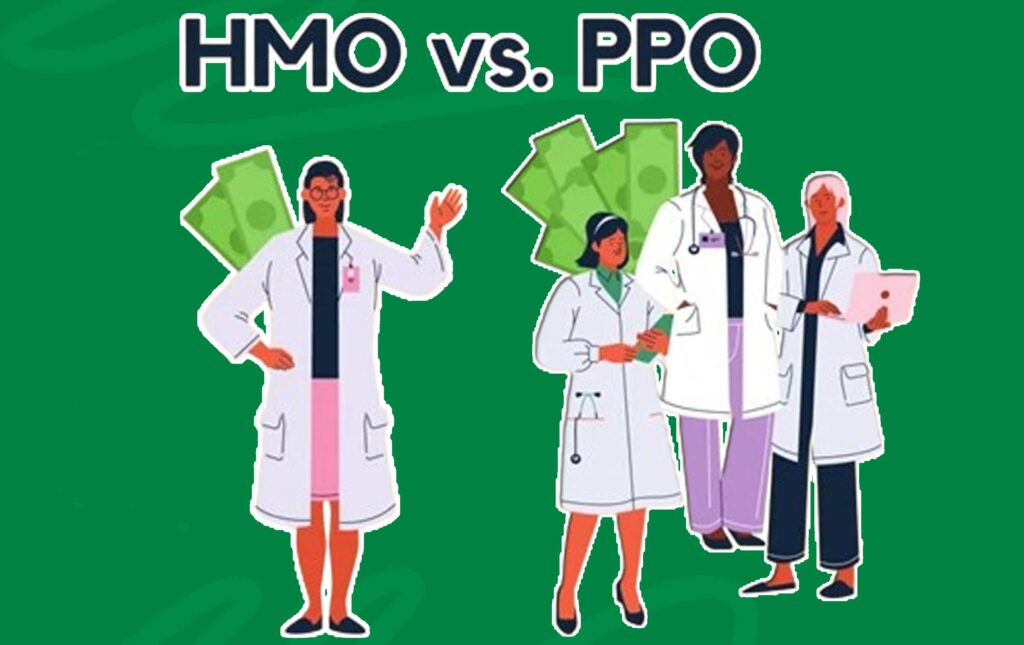
What’s the Difference between PPO and HMO Health Insurance- Preferred provider organizations (PPOs) and health maintenance organizations are the most popular types of health insurance plans. Although they share similarities, they are very different in many ways. PPO is known for its flexible care and expensive costs. They are very flexible and cover both out-of-network and in-network care.
What's the Difference between PPO and HMO Health Insurance

Meanwhile, HMO is known for its lower costs and provider networks. The plans are also very restrictive and do not cover out-of-network care unless it is an emergency. The right type of health plan for you depends on how much you want to pay and if you prefer a health plan with fewer restrictions. Read this article to know What’s the Difference between PPO and HMO Health Insurance.

What is PPO (Preferred Provider Organization)?

A PPO (Preferred Provider Organization) is a network of doctors, hospitals, and healthcare providers who offer medical or health services at agreed rates. Unlike an HMO, you can see both in-network and out-of-network providers, though they are quite expensive when it comes to out-of-network care.

The plans usually cost more in premiums but give you more flexibility and freedom. You don’t need a primary care physician and can meet with a doctor or specialist without a need for referral. It is a very good choice if you travel a lot, as you can get care anywhere. Additionally, PPOs also give you more options for lab work. It allows you to choose the most convenient location within the network.

Pros and Cons of PPO Insurance Plans

Meanwhile, PPO health plans are commonly offered by employers and have their own pros and cons.

PPO Pros:

  • More flexibility: Unlike HMOs, PPOs have a network of providers; they also cover some costs for out-of-network care. Just keep in mind that out-of-network care is quite expensive.
  • No referrals needed: Unlike HMOs, PPOs don’t mandate you to get a referral from a primary care doctor to meet with a specialist. You can go directly to any specialist of your choice.
  • Great for travelers: Just like I have mentioned above, if you travel often, a PPO can be beneficial because you can get care outside your network, though it may be more costly.

PPO Cons

  • Higher costs: PPOs are usually more expensive than other health plans. You will have to pay more for the extra freedom and fewer restrictions in choosing your care and specialists.
  • No primary care provider (PCP) to coordinate care: Without a PCP, you won’t have a doctor or specialist who knows your overall health and can take you through the healthcare system.
  • Potential for paperwork with out-of-network care: When you meet with an out-of-network provider, you might have to pay upfront and then seek repayment from your insurer. This means you’ll need to take care of the documents and claims process yourself.

What is an HMO (Health Maintenance Organization)?

An HMO (Health Maintenance Organization) is a network of doctors, hospitals, and other healthcare providers who agree to offer services at affordable rates. To make the costs very affordable, HMOs usually require you to choose a primary care physician (PCP) who coordinates your care and refers you to specialists.

However, these health plans only cover care from providers within their network, except during emergencies. Even lab work must be done at designated network labs.

HMOs are typically more affordable and inexpensive than PPOs, with lower monthly premiums. They are good options if your preferred doctors are in the network or if you mostly get care close to your area.

HMO Insurance: Pros and Cons

HMO insurance can be a great choice for people who want the lowest health insurance rates. However, the plans limit the number of doctors you can see unless you wish to pay out of your pocket for the out-of-network providers.

HMO Pros

  • Lower health insurance rates: HMO plans are generally more affordable than PPO plans. For a 30-year-old on an ACA plan, the average monthly cost is $427 for an HMO, unlike $512 for a PPO, saving over $1,000 a year on average.
  •  Lower out-of-pocket costs: HMOs always have low copays, deductibles, and coinsurance.
  • Coordinated care through your doctor: HMOs require you to choose a primary care doctor who knows about your health history. And helps manage your care by referring you to other in-network specialists.

HMO Cons:

  • Very expensive for out-of-network care: If you go to a doctor or hospital outside the HMO network, you’ll usually have to pay all the costs yourself. The only exception is emergency care, which is covered at in-network rates.
  • Limited provider choices: HMOs restrict policyholders to their network of doctors and hospitals. This might not be a bad thing if you have many options nearby. However, it can be quite challenging if most local providers don’t accept your HMO coverage.
  • Need referrals for specialists: To meet with a specialist, you typically need a referral from your primary care doctor. Some individuals find this extra step tiring and a hurdle to getting the specialist care they need.

What’s the Difference between PPO and HMO Health Insurance

The main difference between PPO and HMO health insurance is flexibility versus cost.   Just like I have mentioned above, PPO (Preferred Provider Organization) plans allow you to see any doctor or specialist without needing a referral, even if they are out-of-network, though you’ll pay more for out-of-network care.

 Meanwhile, HMO (Health Maintenance Organization) plans require you to select a primary care physician who takes care of your health and gives you referrals to see specialists.

     HMOs           PPOs
     Costs    Cheaper   Very expensive
   Availability  They are mostly offered in the Affordable Care Act Marketplace (ACA). Mostly offered by the employers sponsored health insurance
Need to choose a primary care physician (PCP)    Yes   No
Need a referral to see a doctor or specialist    Yes   No
  Out of network care?  No Yes
  Need to file health claims?    No  Not always. But you need to file claims for out-of-network care

Selecting the best health insurance plans requires that you know what you need and want from that type of coverage. HMO is a perfect choice if you want an affordable plan and can stay within the provider network of the plan. A PPO would be the best option if you want flexibility, even if it results in higher insurance premiums.

PPO and HMO Health Insurance Similarities

These two are different in many ways, but the only place they are similar is in their levels of coverage. Any one you go for between the two, each plan covers the same service types. For example, ACA plans, which are offered on the state and federal health insurance exchange websites, must cover important medical benefits such as

  • Emergency care
  • Hospitalizations
  • Laboratory services
  • Mental health and substance use disorders
  • Pediatric services, such as dental and vision care for children
  • Pregnancy, maternity, and newborn care
  • Outpatient care you get without being admitted to a hospital.
  • Prescription of drugs
  • Preventive and wellness services and chronic disease management
  • Rehabilitative and habilitative services

Under the ACA, health insurance plans should also cover breastfeeding and birth control. Although the employer-provided group health insurance isn’t required to contain these listed benefits, it often does anyway.

Both PPOs and HMOs can be high-deductible health plans (HDHPs). An HDHP is a health insurance plan with an out-of-pocket cost of at least $1,500 for a person or $3,000 for a family. So, if a health plan has a $2,000 deductible, it qualifies as an HDHP, whether it’s an HMO or a PPO.


Weather Insurance – What it is and How it Works

0

Imagine you have planned the best outdoor event or occasion and prepared every detail, and then suddenly there is a downpour threatening to destroy your perfect event. Or picture this: you have plans to launch an outdoor festival, and a storm happens unexpectedly, disrupting your plans and entire investments. This is where weather insurance comes in.

Weather Insurance - What it is and How it Works

There is no doubt that weather can be chaotic and unpredictable, but with the right amount of coverage, you can reduce the potential financial risks caused by these weather conditions. With such a powerful tool, you can also have peace of mind and security when unforeseen events take place. Without further ado, let us explore this intriguing form of insurance and discover just how much it can cover a policyholder.

What is Weather Insurance?

Weather insurance is a form of insurance that offers protection and coverage to businesses and individuals from financial losses as a result of severe or unpredictable weather conditions.

Contrary to traditional insurance policies that offer coverage for liability and valuable assets, weather insurance pays more attention to the monetary impact of these weather events.

For example, extreme temperatures, rain, wind, or snow. In addition, this form of insurance offers compensation for losses from weather conditions that affect planned operations or activities.

Understanding How This Works

This form of insurance works by assessing the possible impact of severe weather conditions on a business activity or planned event. Before you are given coverage, potential weather-related risks for your business or event will be assessed.

Moreover, you can also personalize your insurance quote to cover these risks, and based on the season and location, your premium amount will be calculated. After purchasing a policy, if something unexpected arises, you can file a claim with your insurance provider.

What Does Weather Insurance Cover?

A wide range of weather-related problems are covered by weather coverage They include:

  • Property damage.
  • Also, event cancellation.
  • Event postponement.
  • Additional costs.
  • Also, revenue loss (for businesses).
  • Travel disruptions (for travel-based operations).

What Does It Not Cover?

Even though a wide range of weather-related issues are covered by weather coverage, there are also specific events or situations that it does not cover. They are:

  • Economic or political events.
  • Pre-existing weather conditions.
  • Also, coverage gaps.
  • Negligence.
  • Non-weather-related losses.
  • Also, regular weather conditions or patterns.

Who Needs a Weather Insurance Policy?

Weather coverage is not suitable for everyone. However, some specific professions or industries should consider this form of insurance. They include:

  • Construction companies.
  • Event planners.
  • Also, promotion and marketing teams.
  • Festival coordinators.
  • Sports organizers.
  • Also, travel agencies.
  • In addiiton, tour operators.
  • Outdoor retailers.
  • Agricultural businesses.

How Much Does it Cost?

The cost of buying a weather policy is affected by different factors. Moreover, all of these factors will be considered by the insurance provider before giving an estimate of the premium amount. They are:

  • Location.
  • Insurance company.
  • Also, type of coverage.
  • Risk factors.
  • Time of the year or season.
  • Coverage limits.
  • Business or event type.

Overall, the calculation of the premium is carried out based on figuring out the risk involved with the insured activity or event.

How to Buy Weather Insurance

Buying weather insurance is very straightforward, especially if you know the steps to follow. Hence, to find the best policy that suits your needs, follow the steps below:

  • Assess your needs.
  • Research insurance companies that offer such coverage.
  • Check their customer reviews, policy types available, and reputation.
  • Obtain multiple policies from different insurers.
  • Compare these quotes.
  • Consult a professional or expert.
  • Choose a policy that meets your budget and needs.
  • Begin application.
  • Check the terms and conditions of the insurance policy carefully.
  • Make the necessary payments to activate coverage.

After this, you will get your policy documents. It is important to keep them safe and review your insurance quote regularly.

FAQs

What types of weather conditions are typically covered by weather insurance?

Generally, conditions like snow, extreme cold or heat, strong winds, heavy rain, and other serious weather events that can affect business operations and events are covered by weather insurance.

Can weather insurance be purchased for a one-time event?

Certainly, you can purchase or buy a weather insurance policy for a one-time event like festivals and outdoor weddings.

Is there a standard policy for weather insurance, or is it customized?

Based on the needs of a policyholder, insurance policies can be customized or personalized to cover risks related to your business or event.

What documentation is required to file a claim?

Before filing a claim with your insurance provider, you want to make sure that you have the necessary documents. You might need details of the weather condition, associated financial losses, and how it affected your business or event.

How is the premium determined?

Factors like the time of the year, event type, probability of unfavorable weather conditions, and location are factors that determine the premium amount.

What Are Paid-Up Additions in Life Insurance

0

Paid-Up Additions in Life Insurance allows you to increase your life insurance coverage without increasing your premium payments. The additional coverage is added to the death benefit amount, and the premium payment goes towards the policy’s cash value.

What Are Paid-Up Additions in Life Insurance


The additional coverage obtained as PUA insurance does not require regular premium payments to stay in effect. As the name implies, it is fully funded, permanent coverage.

How Does it Work?

Paid-up additions let you boost your policy’s death benefit and cash value in tiny amounts. PUAs also produce dividends, which compound your earnings over time.

Dividends are payments you may receive from your life insurance company if its business did well in the previous year. Essentially, the life insurance business is repaying a percentage of premiums to policyholders who are eligible.

The specific laws governing PUA insurance vary by business. In other circumstances, you can buy as much or as little PUA as you like. Other policies require you to purchase a set amount each year. Otherwise, the rider may be removed and you must reapply for it.

If you want to add a PUA rider to your whole life insurance policy, your dividends will most likely need to accumulate before you can purchase more insurance. This could take several years. However, if you later add the rider to an existing policy, the current payouts can be utilized to acquire PUAs immediately.

Benefits of Paid-Up Additions in Life Insurance

No medical underwriting

If you ever wish to enhance the death benefit on your life insurance policy, you will most likely need to go through a medical exam and/or answer questions about your health and medical history. In contrast, paid-up supplemental insurance typically does not require further medical underwriting.

Increase the value of your life insurance policy at no extra expense.

Using life insurance dividends to purchase PUAs allows you to gradually enhance the value of the death benefit and cash value without increasing your premium.

Tax-deferred expansion of cash value

PUAs are essentially mini-packages of full life insurance. So the cash value component provides the same benefits as your initial policy. This includes the ability to increase cash value tax-deferred until you surrender or sell the insurance. If you never surrender the policy and keep it until the death benefit is paid, no taxes will be imposed.

Surrender Value

If you ever need more money, you can cash out your paid-up supplemental insurance at any time. The original policy will remain unchanged. You might borrow against the cash value of PUAs.

Do I need Paid-Up Additional

Paid-up supplementary insurance is not an important aspect of life insurance. However, if you’re thinking about purchasing a whole life insurance policy, a PUA rider may be useful.

It’s a simple approach to boost your death benefit and maximize the growth of your cash worth. This can create a greater pool of money from which to withdraw or borrow if you ever require immediate cash.

Alternatives to Paid-Up Additions in Life Insurance

  • Get cash: Instead of reinvesting profits into the policy, you can collect them immediately via check. Dividends are often regarded as a return of premium and are not taxed as income in most circumstances.
  • Reduce the premium: You can reduce the amount you pay in premiums by applying dividends to the amount owed.
  • Accumulate: You can save the profits in your life insurance policy’s cash value account and collect interest. You can withdraw them later as needed.

Frequently asked questions

How does a paid-up additional policy differ from a traditional life insurance policy?

In a traditional life insurance policy, you pay regular premiums to maintain coverage. A paid-up additional policy provides extra coverage without requiring additional premium payments after the paid-up conditions are met.

Who can benefit from a paid-up additional life insurance policy?

Paid-up additional policies are suitable for individuals who want to increase their life insurance coverage but may not be able to afford higher premiums or prefer not to pay more over time.

What are the advantages of a paid-up additional life insurance policy?

Benefits include increased coverage without raising premium payments, potential cash value growth, and the option to access policy funds through withdrawals or loans.

How can I determine if a paid-up additional policy is right for me?

Consider your financial goals, life insurance needs, and long-term affordability. Consult with a financial advisor or life insurance agent for guidance tailored to your circumstances.

How do I qualify for a paid-up additional policy?

Eligibility requirements vary by insurer, but generally, you must have an existing life insurance policy and meet specific conditions, such as maintaining your policy for a set duration or reaching a certain age.

Can I add a paid-up additional policy to any type of life insurance?

Paid-up Additional policies are often added to whole life insurance or universal life insurance policies but may not be available with term life insurance.

How much additional coverage can I get with a paid-up additional policy?

The amount of additional coverage depends on factors such as your existing policy’s face value, premium payments, and policy duration.

Can I cancel or reduce my paid-up additional policy?

You may be able to cancel or reduce your paid-up additional policy, but the terms and consequences of doing so depend on your specific policy and insurer.

What Factors Affect Car Insurance Rates

0

Some factors affect your car insurance rates. These factors can be age, location, driving record, gender, and any other factor, including your credit score. Identifying what factors affect car insurance rates provides a better understanding of how car insurance companies go about their pricing.

What Factors Affect Car Insurance Rates

Car insurance companies consider some factors when determining risk and car insurance rate prices. This means that the chances of a customer getting approved for cheap car insurance rates depend on these factors. The lower your insurance risk, the better your car insurance rates, making car insurance more affordable.

Various factors affect your car insurance rates, and these factors vary by insurance company. However, if the factors considered disclose lower risk, the policyholder gets better insurance rates, while it is the opposite for high-risk policyholders.

Factors Affecting Car Insurance Rates?

Not all car insurance companies have the same pricing. What you are charged for a car insurance quote in one company may be different in another company. Sometimes, the pricing of one insurance company may be cheaper or more expensive than other car insurance companies. The following are some factors that affect your car insurance rates.

Age

Drivers who are younger and less experienced are considered more likely to file a claim due to accidents. Because of this, young adults are likely to pay more for high insurance rates than older adults. When you get to the age of 25, your car insurance premium rates begin to reduce continuously as you age. However, older drivers pay more in insurance rates. Drivers of the age of 75 and above tend to pay more.

Location

Car insurance rates vary by state and even ZIP codes. This is because drivers who live in big cities have a higher risk of getting into an accident or filing a claim for car theft or vandalism.

In some locations, the cost of medical care is more expensive than in other locations. In your new location, your car can be damaged through weather-related issues such as wildfires or windstorms. These are more reasons why your insurance rates may be affected.

Gender

Women are considered less at risk of getting involved in an accident than men. According to the Insurance Information Institute report, if ever they do get involved in an accident, it is often a less intense accident. As a result, insurance companies take a driver’s gender into account when calculating insurance rates.

Driving Record

Your driving records are always reviewed by insurance companies when processing your insurance rates. Drivers with a clean record typically receive lower insurance rates, while those with a poor record face higher premiums. This means having a bad driving history could lead to paying more than the standard rate.

Marital Status

The Insurance Information Institution report shows that married people file fewer claims than single people. Because of this, they get lower insurance rates than singles. Married couples who have more than one car also have a better chance at good insurance rates.

Vehicle Type

Car insurance rates also depend on the type of vehicle you drive. Other factors of your car that may affect your insurance rates are the cost of repairs to your vehicle, the cost of car replacement, the engine size, safety features, the amount of damage your car is likely to cause in times of collision, and whether or not your car is common among thieves. Another factor considered is whether your car is financed or not.

Insurance or Claim History

Every car insurance company has its insurance rates. Some insurance companies may have different pricing for premiums for some insurance coverage. If your existing insurance rates are too high, check out insurance quotes from different insurance companies to give you an idea of how to save. In doing this, keep an eye on how each insurance company knows their financial stability and how they handle claims.

Does Filing a Claim Affect Insurance Rates?

After you file a claim, your car insurance rates will increase when you are at fault. Sometimes, your claim needs to be over a specific dollar amount before it affects your insurance rates.

Other times, your insurance rates may be affected where you are not at fault. However, factors that affect your insurance rates depend on the insurance company policies, the size of your claim, claim frequencies, and other factors insurers consider.

What Happens if You Don’t Use Long-Term Care Insurance

0

Long-term care insurance can be used as a financial planning asset that can cover essential services like home health aides, nursing homes, and more if mandatory. Additionally, if you choose to get coverage and require any of these services, this insurance type could be worth considering. However, what happens if you don’t use long-term care insurance?

What Happens if You Don't Use Long-Term Care Insurance

Is it worth having long-term insurance even if you don’t need it, or are you going to lose the finance you reimbursed into your policy? In this article, we will go over what long-term insurance is all about. Also, what happens if you don’t use this coverage type.

 What Happens if You Don’t Use Long-Term Care Insurance Benefits

There are various factors to determine what happens if you obtain long-term care insurance but don’t use it. In addition, there are different kinds of long-term care insurance you can select from. Moreover, the policy type you select will affect what happens if you don’t use long-term care insurance or require medical attention.

Hybrid Long-Term-Care Insurance

A hybrid long-term care insurance policy is a smart option that ensures you receive value from your coverage, whether or not you end up needing care. This policy, including those on life insurance or annuity chassis, provides value for the insured in various scenarios.

Hybrid policies offer cash value back, with annuitybased cash value minus surrender charges. Premium rider returns can also result in full payment. However, if you never use it, you will receive a tax-free death benefit, similar to life insurance death benefits, which will be given to heirs.

Traditional long-term care insurance

Traditional long-term care insurance operates much like health or auto insurance, created specifically to cover the costs associated with long-term care. Therefore, choosing a traditional long-term care insurance policy over a hybrid option may result in a potential premium loss if you die before medical attention is needed.

If you ever want your money back, or you die, there is zero value. Additionally, the cost of maintaining coverage under a traditional policy will prevent you from doing so. Traditional long-term care insurance policies are not protected from rate increases, causing premiums to increase over time.

Shared Spousal

Traditional long-term care insurance provides coverage for a couple. And a surviving spouse for unused long-term care insurance after the other spouse passes away.

In addition, if the dead spouse used all the coverage benefits before he/she passed away. The surviving spouse would not gain any benefits from the policy. However, if one spouse exhausts all their available benefits, the unused portion of the other spouse’s policy may be used to cover additional care.

Do I Need Long-Term Care Insurance?

Generally, not everyone needs long-term care insurance. While this insurance is an effective way to protect yourself against the traumatic cost of long-term care. However, long-term care may be a good way to get over depleting your life savings for long-term care services and retain access to the widest variety of quality long-term service options.

What Happens if I Never Use My Long-Term Care Policy Benefits?

If you never used your long-term care benefits, you and your family should probably be grateful that you didn’t go through what so many families do. But is it possible for you and yours to get the money back? If you never used your long-term insurance benefits, it means you never needed long-term care. Most people would consider this a good thing since there is a high risk of needing extended long-term care.

What Happens if I Purchase a Long-Term Policy But Don’t Need Long-Term Care?

Generally, long-term care insurance follows a “use it or lose it” approach. This means you won’t receive any benefits from the policy if you never require long-term care. While this is so, some traditional long-term care insurance may return your money if you decide you don’t need the policy anymore, but this process is more costly.

However, if the policy isn’t used, hybrid long-term care insurance provides a death benefit to your beneficiaries. Most of them offer a “return of premium” feature allowing policyholders to get their money back if they quit their policy. 

Are there Tax Benefits to Unused Long-Term Care Insurance?

Traditional long-term care insurance offers all or part of the insurance premium to be tax-deductible depending on some IRS restrictions and qualifications. However, other types of hybrid insurance policies premiums are not tax deductible.

What Happens When You Pay Off Your Mortgage

0

Paying off your mortgage can be difficult but most times worth it, but what happens when you pay off your mortgage? You will gain full ownership of your home. After paying off your mortgage, you get to avoid excess interest rates as well as face a lower risk of losing your home if you default on the loan.

What Happens When You Pay Off Your Mortgage

Completing your mortgage payment is a huge financial breakthrough most borrowers dream of. It comes with benefits such as lower interest rates, no late fees. And even a positive impact on your credit score. While this is good, you can pay off your mortgage loan by paying a larger amount on monthly payments, refinancing, and even considering other methods to pay off the mortgage.

After you pay off your loan, your lender or loan servicer will provide documents that show your loan repayment proof as well as hand over ownership of the home. Aside from these, there are other things you need to know about what happens when you pay off your mortgage.

What Happens When You Pay Off Your Mortgage

After you pay off your mortgage, different things will happen. You will need to prepare yourself for:

Collect Different Documents from Your Lender

You will receive paperwork from your lender or loan servicer that confirms that you have completed your loan payment and your mortgage obligation will be formally released.

Modernize Your Homeowners Insurance Policy

Ensure you inform your homeowners’ insurance to remove your mortgage company from your insurance policy. This is done by the removal of the mortgage clause. This authorizes them to be reimbursed if eventually the home is damaged or destroyed.

Make Preparation for Paying Local Property Taxes

Because your lender is no longer responsible for your property tax payment. This is drawn from your escrow account, you will now be responsible for paying your property taxes. Ensure both you and your accountant get notifications concerning the tax amount and due dates from your state.

Create a Note to Notify Your Accountant About Tax Season

You will no longer have mortgage interest that will no longer be deducted on your tax return.

Monitor Your Credit

Keep an eye on your credit score after your mortgage loan is removed from your credit record. This is because your credit score may be affected and may drop slightly. You may also need to update your financial information on every credit card account, stating that you no longer have a loan to repay.

How Does Paying Off Your Mortgage Affect Your Credit?

Paying off your mortgage fully generally does not affect your credit score but may cause your credit to drop slightly after the mortgage is removed. This is because of a reduced credit mix, which means the borrower no longer has as big a range of debt to pay off.

What Happens to Your Escrow Account When You Pay Off Your Mortgage?

The borrower’s mortgage servicer is required to return any amount of money left in the borrower’s escrow account within 20 days after they fully repay their mortgage. After this has been done, the escrow account will be closed.

How to Pay Off My Mortgage

There are certain steps you should take to ultimately pay off your mortgage. Most borrowers prefer paying off their mortgage on time to save on interest rates. The following are the steps to pay off your mortgage:

  •  Appeal for a payoff quote from your mortgage servicer.
  • Pay off the loan amount left as stated on the quote.
  • You will be given documents that verify your loan repayment.
  • Ensure your loan payoff is written down with your local government and you have proof of that.

Through these processes, you can easily pay off your mortgage loan. Aside from this, other ways you can pay your mortgage loan are refinancing, recasting, biweekly payments, and paying extra every year.

Should I Pay off My Mortgage?

If you want to avoid paying more on interest rates or you can afford to pay off the loan, it may be a good idea to pay off the loan. Paying off your mortgage loan can help you save on interest rates and even invest.

Generally, borrowers are required to pay off their mortgage by the agreed date stated in the mortgage agreement, but paying off your loan on time may have a good impact on your finances.

There are several reasons why you may consider paying off your mortgage. These include reducing your monthly bills, peace of mind, and extra income to your savings. In summary, whether or not you should pay off your mortgage depends on your finances.

What to Do if Your Private Student Loan Co-signer Dies

0

What to Do if Your Private Student Loan Co-signer Dies- The lender’s policies determine what happens if your private student loan cosigner dies. Some lenders may automatically default on the loan, asking for the remaining balance to be paid immediately, even if the borrower has been making payments. This might be a financial strain, especially if the borrower does not have the money to pay the full debt.

What to Do if Your Private Student Loan Co-signer Dies

Other lenders may provide a death discharge, which eliminates the cosigner’s liability under the loan. Your cosigner is most likely someone dear to you. And you should spend your time dealing with bereavement rather than your student loan.  Unfortunately, when a cosigner dies, the situation can become difficult. Here are What What to Do if Your Private Student Loan Co-signer Dies

What to Do if Your Private Student Loan Co-signer Dies

While your student loans may not be affected, an unexpected default is possible. The following three steps will help you keep your student loans in good standing:

Review your Student Loan Documentation

The first thing you should do is study your loan’s terms. Certain private student loans demand notification of death, while others do not. If you are obligated to notify the lender that a cosigner has died. The information should be found in your loan’s terms and conditions.

Each lender and loan agreement is unique, so you won’t know what your responsibilities are until you review your documents. In some situations, you may be able to continue with the loan without a cosigner. In others, you may face auto-default.

What is Auto Default?

An automatic default clause is sometimes included in student loan agreements, which causes your loans to default if your cosigner dies. This occurs automatically, regardless of your previous payment history or present financial situation.

Once in default, the lender can pursue you for repayment and may even seek payment from the cosigner’s estate. Unless you can pay the bill in full, this default will most certainly have an influence on your credit score, making it difficult to get credit cards, car loans, or mortgages in the future.

If you have an automatic default clause, you should consider refinancing the loans right away (more on that later).

Alternatively, if a cosigner is terminally sick, you may want to research this information ahead of time. You may need to make changes to your loan while the student loan cosigner is still living, such as filing for cosigner release.

While most large lenders no longer use automatic default, it’s still vital to read your student loan agreement carefully to be aware of the handful that do.

Inform your Lender if Required

When checking your student loan documents, find out if you need to notify your lender in the event of a student loan cosigner’s death. Still, it’s worth checking to see whether your lender has specified any activities you must do to maintain good standing.

If your lender can remove your cosigner’s name from the account. And list you as the sole responsible party, it may be worth advising them of the situation.  However, if there is no obvious benefit to notifying your lender. You may be better off keeping this information to yourself.

Consider refinancing your Student Loan

If your cosigner has died away and your promissory note contains an auto-default clause, you might try refinancing with another lender before the default occurs.

Refinancing is taking out another loan to pay off your current one, usually at a reduced interest rate, which will save you money over the course of the loan. The process can take as little as a few days, so you can complete it. And this is either before your lender learns of your cosigner’s death or before the default occurs.

This is how the refinancing process works.

Shop for Interest Rates

Loan refinancing businesses will usually provide you an estimate of the rates you could be offered without having a thorough credit check. This means they will check your credit score without placing an inquiry on your credit record.

Determine whether you need another cosigner

The rate-shopping process will help you determine if you can apply for a refinance on your own or if you need to locate a cosigner to qualify. If you’re informed you need a cosigner, take a step back and think about whom you can ask for support before pressing forward with the application.

Choose a lender

After you’ve shopped for rates, analyze the advantages and disadvantages of each lender as well as the payback conditions to determine which firm is ideal for you. For example, Earnest allows borrowers in good standing to seek a payment skip once a year if an unexpected expense arises.

Extras like these could be the difference between two companies with otherwise similar terms.

Find your 10-day payout amount

The 10-day payoff amount is the exact amount of principal and interest required to bring your loan down to zero within 10 days. You’ll offer this number to your new loan business. And it will decide how much you need to borrow to pay off the loans in full.

Select your loan terms

Some firms, such as Earnest, will allow you to select your monthly student loan payback from a sliding scale based on interest rates and loan length. 3 You can decide what works best for your personal finances.

Begin making payments on your new loan

Once your old debts are paid off, you can begin making payments on your new one to ensure you stay in good standing.

Refinance later to get better interest rates

After a year or two of regular payments, you may be able to refinance for a reduced interest rate, with or without a cosigner. This could result in even greater savings in interest over time.

What if there’s No Auto-Default Clause?

If you’ve examined your loan papers and there’s no auto-default clause that kicks in when your cosigner dies, nothing should change with the loan. Your payments, as well as rates and terms, should be consistent.

The only difference is that the lender will no longer have someone to retrieve the loan from if you are unable to repay it. But that is not your problem; it is theirs. If nothing in the documentation specifies that your loan would go into auto-default. You can continue paying it back in the same way you did when your cosigner was living.

Frequently Asked Questions

What if you cosign for someone and they do not pay?

If the borrower fails to pay or defaults on his or her repayment obligations, the lender may take legal action against you, pursue you through debt collection agencies, or sell the debt to a “debt buyer” in order to collect the money owing on the loan.

Can you take a cosigner off a private student loan?

A co-signer can only be removed once the borrower has made a certain number of on-time payments on a private student loan and meets other requirements.

Why is being a cosigner so risky?

Acting as a cosigner might have major financial ramifications. First, cosigners accept legal responsibility for a loan. If the principal borrower is unable to make the agreed-upon payments. The co-signer may be required to pay the entire amount outstanding. Second, a co-signed loan will be recorded on the co-signer’s credit records.

What Happens if your Insurance is Cancelled for Nonpayment

0

Were you unable to send in your insurance premium? And this makes you search the internet for “Can my insurance be cancelled for non-payment?” “What Happens if your Insurance is Cancelled for Nonpayment”? The truth is, if you fail to pay for an insurance premium, your policy may get canceled. And imagine waking up one morning to find out that your policy is no more.

What Happens if your Insurance is Cancelled for Nonpayment

You need to always remember that if your insurance gets canceled for non-payment. It means you no longer have financial protection against unexpected events like car accidents, home damage, or health issues. Without coverage, you’re left to handle these various costly problems out of your own pocket. This makes it crucial to understand how to prevent your insurance from being cancelled and what steps to take if it happens. Read on to know more about What Happens if your Insurance is Cancelled for Nonpayment.

What Happens if I miss an Insurance Payment?

Whether you just purchased a policy as a beginner or you want to renew your policy. You always need to think about making payments on time. Generally, insurance providers fix a certain time and date in which you need to send in your payment. And if you miss this time, your policy could get canceled. In certain cases, insurers do have the option to stop your policy even if you are late on payment for a day.

Just so you know, having a lapse in coverage can affect you in different ways. And it might even cause difficulty in getting coverage for that same policy in the future. Below are some of the penalties you can face if you miss an insurance payment:

  • Cancelled Policy: Just as I have mentioned above, your insurance provider may cancel your policy when you miss multiple payments or are far too behind on payment.
  • Your policy won’t be renewed; Not only will your policy be cancelled by the insurer, but you may not be able to buy another policy from the provider.
  • Department of Motor Vehicles Fines: This is mainly for car insurance policies. Having car insurance is mandated in almost every state, so you may get a fine from the DMV for a lapse in your coverage.
  • Increased rates: When you buy that same policy again, your rate may be higher than it was before because of the coverage lapse.
  • Impacted credit score: Unpaid premiums may later affect your credit score.

What Happens if your Insurance is Cancelled for Nonpayment

If your homeowners or car insurance policy gets canceled because you missed a payment, here’s what can happen. Keep in mind that missing a single payment isn’t always a disaster. Most insurers might overlook one late payment if you are behind for just a few days.

In this case, the best thing to do is to contact your insurer the moment you notice the missed payment. Explain your situation to an agent; sometimes they can help provide solutions to avoid cancellation. Pay as soon as you can, and think about enrolling in the automatic payments to prevent any missing payment issues in the future.

However, if you are late for more than a few days, the situation gets trickier and more difficult. You should still contact the insurer right away and speak to an agent about the options you have. The insurance company might have a grace period, which is a short extra time to make payment after the due date without losing coverage.

If you’re still within this grace period, you can usually pay without any issue; however, there might be a late fee. If there’s no grace period or you miss it this period, your policy could get canceled. But you’ll get a notification before the cancellation happens, so it won’t come unexpectedly.

If my Insurance is Canceled, Can I get it Back?

When your homeowners, renters, car, or any other policy gets canceled, you will need to purchase another policy. However, you may have to go to another insurer to get this coverage. Note: The former insurer may send a report to the credit bureau for the unpaid amount after the policy has been canceled.

For example, if it is a car insurance policy, you will need to buy another policy and offer updated info to the DMV in your state. This will make sure that your registration and license are still valid. If you did not do this, you could face other penalties and fees.

Will a Cancelled Policy make it Difficult to Get Insurance?

Unfortunately, if your policy gets canceled, getting a new policy can be tougher. Most insurers might see you as a high-risk if you have a lapse in coverage, making them think you might file more claims or miss payments. And because of this, some companies might not want to offer you a policy, or they might charge you higher rates.

What should I do if I cannot afford the Next Insurance Payment?

If you know you won’t be able to afford your next car insurance payment. It is advisable to contact your insurer as soon as you can. Different companies have their own rules, but you can be able to change your payment date to better fit your payday/salary. Some insurers might even allow you to defer your payment, meaning you can pay it later.

If you have autopay set up, you can be able to delay the payment date through your online account or the insurer’s app. Inform your insurer and let them know before the due date. And they might be able to pause the payment for you.

Additionally, many insurers provide policyholders with discounts for setting up autopay. This can help you prevent missing payments and even save a bit on your policy.

How to Avoid a Missed Insurance Payment

Just so you know, there are many things that can help avoid non-payment problems in the future if you have missed multiple ones in the past. You can enroll in automatic payment (autopay). Just as I have mentioned above, the easiest thing is to set the autopay. This way money will be deducted from your registered bank account or charged to your credit card automatically.

Secondly, you can set reminders. Setting a reminder on your phone or calendar will alert you when the payment date is due. Thirdly, you should shop around for affordable coverage. As mentioned above, if your policy is cancelled, you may not be able to get it back.

You can take this as a chance to shop around for more affordable and flexible options. Lastly, ask about the grace period. Some insurers offer a grace period after your due date. This enables you to make payment a few dates later without your policy being canceled. Contact your insurer and know more about the grace period.

What Is A CLUE Report For Insurance

0

When determining your rates, insurance companies especially home and car insurers review your previous claims .This is a common practice among all insurance companies, but how do they get access to your past insurance? This is where a CLUE Report For Insurance comes into the picture. It is a database that stores your insurance claim history, including the date of loss, type, and the amount paid, as well as the policy number, claim number, and company name.

What Is A CLUE Report For Insurance

A Comprehensive Loss Underwriting Exchange (CLUE) holds the history of your property insurance claims for rentals, homes, and vehicles. LexisNexis Risk Solutions offers this database, and the information it holds is subject to Federal Fair Credit Reporting Act (FCRA) guidelines. With an underwriting guideline the FCRA lays out, a CLUE report shows up to seven years of homeowner/renter and auto insurance losses connected to a policyholder.

How Does A CLUE Report For Insurance Work?

CLUE data accumulates a lot like credit reporting organizations collecting data from creditors concerning your credit history and usage. Daily and weekly, insurance companies report claims information to the CLUE database. However, not all insurance companies do this, but most of them do.

Anytime you apply for a home insurance or car insurance policy, your insurer will review your records through customer reporting agencies to get your CLUE report. Using your report, insurers can evaluate what your premium will be. However, limited coverage and higher premiums are expected based on your CLUE report.

Who Has Access to a CLUE?

A CLUE can be accessed by insurance companies and insurance agents with the authority of the company. Insurance companies generally contribute to the data on your CLUE, which comes together and can be obtained when needed. In some cases, you may also be able to access your CLUE report.

Can I Get My CLUE Report?

Yes, you are entitled to get your CLUE report yearly if you’d like to. Whatever your report shows affects your premiums, and for this reason, policyholders would like to review their CLUE regularly to make sure their loss info is proper.

However, if there are any inaccuracies, correcting them may take time, but it makes sure you get the best coverage option. Furthermore, you are entitled to dispute incomplete information on your record. To achieve this, you are to inform LexisNexis of the mistakes, and FCRA will work with your insurer to correct those errors.

How Do Insurance Companies Use a CLUE?

It is used to underwrite and determine rates for new policies. Insurers use your reports to determine your premiums and the level of risk you pose. However, most insurers who renew existing policies do not check your CLUE for renewal reports. This is because they have loss histories for existing policyholders and their properties in their database.

What is the information on my CLUE report?

A CLUE report contains policy information like

  • Name
  • Policy Number
  • Date of Birth
  • Claim information and covered property description.
  • For homeowners, the report contains your property address and vehicle information for auto owners.

Other Information on a CLUE

Aside from the policy information, including loss history, stored in your report, there is no other information on a CLUE. It does not contain criminal records, credit reports, legal judgments, or civil lawsuits.

Why Insurance Companies Are Allowed to Obtain a Copy of a CLUE

Insurance companies are allowed to obtain a CLUE report due to several reasons. As previously stated, these reports are submitted by insurance companies and stored by FCRA and LexisNexis in a CLUE. Some of the reasons insurers access a CLUE include:

  • When needed for underwriting insurance policies.
  • When required by an authorized insurance agent or the insurance company.

How to Get My CLUE Report

There are different situations where you get entitled to check what your CLUE report is for free. One of which is if you get an “adverse action” notice from an insurer denying you coverage due to your CLUE report.

On the LexisNexis website, other reasons why you would be entitled to a free report are stated. However, the following are three main ways to get your CLUE report:

  • Can be ordered online and mailed to you.
  • It can be requested by mail just by downloading the form and following the proper steps.
  • It can be ordered through phone calls.

After this is done, your report will be delivered to you for free if you are entitled to one and may require a fee if you are not.

What Happens When Your Home Insurance Lapses

0

What Happens When Your Home Insurance Lapses – Imagine finding out that disaster has struck your place of residence, be it burglary, weather damage, or a fire, only to discover that your home insurance quote has lapsed. This form of implication can be serious, leaving the policyholder liable to potential financial risk.

What Happens When Your Home Insurance Lapses

So, what happens when your home insurance lapses? Unquestionably, home insurance is like a safety plug that safeguards the home and personal belongings of a policyholder from unpredictable incidents and ensures continuous coverage. In this blog post, we will be figuring out the consequences of a lapse in home insurance and how you can save on premiums if you plan to get a new insurance quote.

What Happens When Your Home Insurance Lapses?

When your home insurance policy lapses, you are automatically left without coverage and exposed to losses and damage. During this period, you will be liable for replacement and repairs out of your pocket. Apart from this, there are other associated complications that you need to be aware of:

Increased Insurance Premium

After a policy lapse, getting a new insurance policy will cost you more, as you will be considered high-risk by the new insurance company. For this reason, insurance providers might make changes to their rates accordingly and see this type of history as a red flag.

Exposure to Financial Risk

The financial responsibility of rebuilding and repairing your house after a covered peril hits it can be high. That is one of the important aspects of insurance, but without it, you will be responsible for the costs on your own or out-of-pocket. This can make one stressed emotionally and mentally.

Your property will be unprotected.

If your insurance policy lapses, your property will become unprotected and exposed to damages or losses. Therefore, if natural disasters, fire, or theft take place, you will have to cover the costs yourself.

Loss of Coverage for Claims

Typically, if a covered peril hits and damages your property, leading to loss, you can file a claim with your insurance provider to receive reimbursement. However, if you experience damage or loss during the lapse period, you will not be able to file a claim with your insurer. In other words, you will not get compensation or support.

Possible Difficulty Getting a New Insurance Policy

A lapse in your home insurance policy can cause new insurance companies to doubt you in terms of coverage. This is because you will pose as a sign of risk with a history of lapses, resulting in difficulty getting new coverage or higher premiums.

Reasons for a Home Insurance Lapse

There are various reasons that can cause your home insurance policy to lapse. In this section, we will be exploring a few.

  • Non-renewal by the policyholder.
  • Missed premium payments.
  • Changes in the decision of the insurance company.
  • Miscommunication.
  • Billing errors.
  • Financial difficulties
  • Ignorance/forgetfulness by the insured.
  • Policy cancellations.
  • Significant changes to circumstances.
  • You are considered high-risk.

All of these factors are responsible for causing one’s policy to lapse.

How to Get Home Insurance After Your Policy Lapses

If your home insurance quote has lapsed or expired, it is important to take immediate action to get new coverage. However, if you do not know what to do, follow this comprehensive guide to effectively get a home insurance quote reinstated or get a new one after your policy lapses:

  • Review your coverage needs.
  • Make sure the new insurance quote meets your insurance needs.
  • Contact your previous insurance company.
  • Discuss reinstating or reactivating your existing policy.
  • Ask if reactivation or grace periods are offered.
  • Compare policies from different insurance companies.
  • If necessary, consult insurance agents and online comparison tools.
  • Prepare the necessary documents.
  • Be transparent and honest.
  • Resolve the lapse cause and support it with evidence.
  • Consider bundling with other insurance quotes.
  • Improve the security of your home.

Lastly, review your insurance coverage periodically. Once you get a new quote, review and update it regularly to make sure that your needs are met and possible policy lapses in the future are averted.

Possible Ways to Save on This Purchase

To mitigate or decrease the cost of a new home insurance policy while attaining comprehensive and sufficient coverage, here are some helpful strategies to consider:

  • Bundle your policies.
  • Go for a higher deductible.
  • Enhance the security and safety of your home. 
  • Request for discounts.
  • Maintain a good credit score.
  • Compare policies.
  • Review your coverage periodically.

Insurance companies sometimes offer loyalty discounts to customers who consistently review their policies or long-term clients.

FAQs

What should I do immediately if my home insurance lapses?

If your home insurance policy lapses, reach out to your insurance company immediately and talk about reinstatement options. You can also consider getting new coverage and make sure it meets your current needs.

Can I still get home insurance if I have a history of policy lapses?

100%, it is possible to get a new home insurance quote if you have a history of policy lapse. However, this can lead to difficulty getting coverage and higher premiums. This is why it is essential to be transparent with your new insurance provider.

How long can a home insurance policy be lapsed before it affects my ability to get new insurance?

The effect of a policy lapse on your insurance history differs by insurance company. Typically, having a policy lapse that is lasting or showing for more than 30 days can be discouraging for new insurance companies. To reduce the negative effect of this, address the lapse immediately.